

May 14, 2026
Here is a fact that surprises many pet owners. By age three, most dogs and cats already have some form of dental disease. It is one of the most common health problems we see at Prairieville Animal Hospital. The tricky part is that pets rarely show obvious pain. They keep eating and playing while trouble builds under the gumline. Knowing the warning signs helps you catch problems early.
Sign one: bad breath
A little doggy breath is normal. Truly foul breath is not. That smell comes from bacteria growing in plaque and tartar. If your pet's breath makes you turn your head away, bacteria have likely moved below the gumline. That is where the real damage happens, and it will not get better on its own.
Sign two: red or bleeding gums
Healthy gums are pink and smooth. Red, puffy, or bleeding gums point to gingivitis, the first stage of dental disease. The good news is that gingivitis can be reversed with a professional cleaning. Left alone, it moves on to periodontal disease, which destroys the tissue and bone that hold teeth in place. That stage cannot be undone.
Sign three: changes in eating habits
Watch how your pet eats, not just how much. A dog with a sore mouth may chew on one side, drop kibble, or swallow food whole. A cat may start leaving dry food behind but still eat wet food. Some pets paw at their mouths or pull away when you touch their face. These are all quiet ways pets tell us something hurts.
Sign four: drooling or pawing at the mouth
Extra drooling, especially with a bad smell or a tint of blood, can mean an infected tooth or a painful spot in the mouth. Some pets rub their face on furniture or paw at their muzzle. Cats may stop grooming and develop a messy coat, because grooming with a sore mouth hurts.
Sign five: loose, broken, or discolored teeth
A broken tooth can expose the sensitive pulp inside, which is very painful and can lead to an abscess. A gray or purple tooth may be dying inside. If you spot any of these while playing with your pet or during brushing, it is time for a dental exam.
Why dental disease matters beyond the mouth
Dental disease does not stay in the mouth. Bacteria from infected gums enter the bloodstream and travel through the body. Over time, this can strain the heart, liver, and kidneys. Treating dental disease is not just about fresh breath. It protects your pet's whole body and can add comfortable years to their life.
What a professional dental cleaning looks like
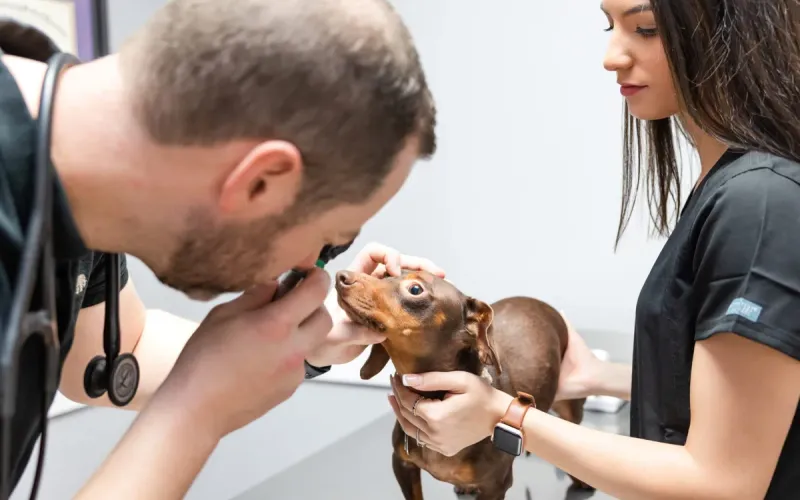
Our dental care visits go far beyond what any brush can do at home. Your pet rests under safe anesthesia while we clean above and below the gumline, polish each tooth, and check every tooth for hidden damage. Before the procedure, we run blood work in our in-house laboratory to make sure anesthesia is safe for your pet. Dr. Travis Procell, a member of the American Veterinary Dental Society, brings a special focus on dentistry to our practice.
What you can do at home
Home care makes a real difference between cleanings. Brushing is the gold standard, and many pets accept it if you start slow and use pet-safe toothpaste. Never use human toothpaste. Dental chews, water additives, and dental diets can help too. Ask us which products actually work, because not all of them earn their claims.
We are here to help
Prairieville Animal Hospital has served pet families in Prairieville, Galvez, and across Ascension Parish since 1998. If your dog or cat shows any of the signs above, do not wait for them to look painful. Pets hide pain until it is severe.
Call us at (225) 677-5005 or contact us to schedule a dental checkup. A healthy mouth means a happier pet, and that is something worth smiling about.
Tag:
Popular Posts
Heartworm Prevention in Louisiana: Why It Matters All Year
Louisiana mosquitoes never take a season off, and neither should your pet's heartworm prevention. Here is why year-round protection matters in our area.
Mar 12, 2026